
NGOs work in the world's highest-risk environments. That makes compliance harder and more important.
Conflict zones, fragile states, and sanctioned regions are exactly where humanitarian need is greatest and exactly where financial crime risk is highest. NGOs operating across these geographies face scrutiny from regulators, banking partners, and institutional donors who all want evidence of a functioning compliance program. Sanction Scanner gives NGOs and nonprofits the donor screening, partner verification, and ongoing monitoring tools to demonstrate that evidence without diverting resources from the mission.
TRUSTED BY OVER 800+ CLIENTS


The risks NGOs face are real and regulators, banks, and donors all know it.
An NGO that cannot demonstrate documented compliance controls is a compliance risk from the bank's perspective and account restrictions happen without warning.
FATF has documented cases of NGOs being used to move funds to terrorist organisations. The risk is not theoretical.
The Financial Action Task Force has identified non-profit organisations as a documented vehicle for terrorist financing both through deliberate misuse and through inadvertent exploitation of weak controls. Recommendation 8 specifically requires countries to apply risk-based oversight to the NPO sector. For NGOs, this means regulators, supervisors, and banking partners are applying a level of scrutiny to their accounts that did not exist a decade ago.
Banks apply enhanced due diligence to NGO accounts, particularly those with cross-border fund flows, operations in high-risk jurisdictions, or relationships with partners in sanctioned regions. An NGO that cannot demonstrate documented donor screening, partner verification, and transaction monitoring processes is a compliance risk from the bank's perspective. Account restrictions and de-risking decisions are one of the most operationally disruptive consequences of weak NGO compliance and they happen without warning.
Accepting a donation from a sanctioned individual, or disbursing funds to a partner organisation with undisclosed connections to a designated entity, creates legal and reputational exposure that can follow an NGO for years. EU AML Directives impose customer due diligence obligations on NGOs handling transactions of €1,000 or more. The screening obligation is not limited to large donors it applies across the donor and partner base, including recurring smaller contributors whose risk profile may change over time.
Compliance is what keeps your banking relationships, your donor confidence, and your operating licences intact.
NGOs do not get fined the way banks do. But they face consequences that are just as operationally damaging. Frozen accounts disrupt programme delivery. Loss of institutional donor confidence affects future fundraising. De-risking decisions by banking partners can effectively shut down cross-border operations. And reputational association with a sanctioned entity can end funding relationships that took years to build. Sanction Scanner gives NGOs the tools to screen donors and partners, monitor ongoing relationships, and produce the documented audit trails that banking partners, institutional donors, and regulators expect to see.
Compliance built around the way NGOs actually work
Designed for lean teams from manual searches for smaller organisations to full API automation for larger operations.

Screen every donor before accepting a contribution
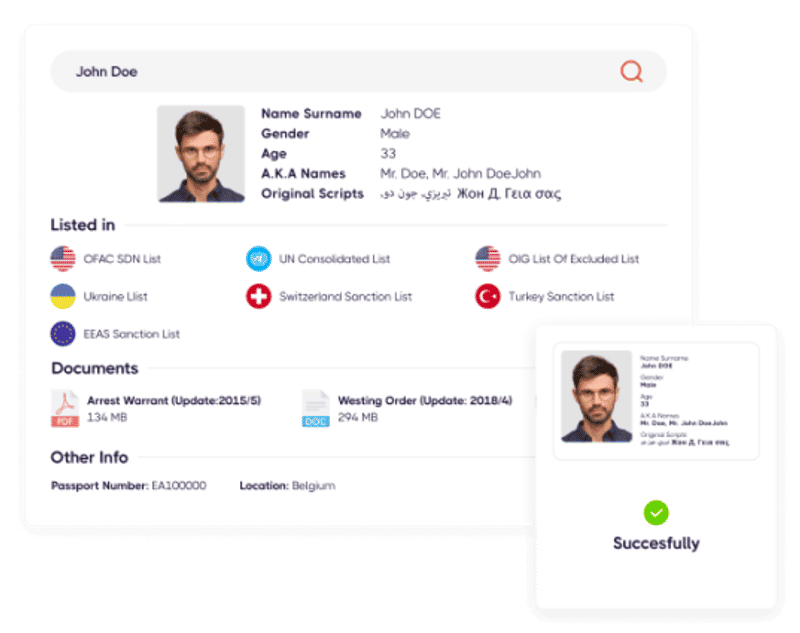
Sanction Scanner screens individual and corporate donors against 3,000+ global sanctions lists, PEP databases, and adverse media sources across 220+ countries at the point of donation not after the funds have already been received. Data updated every 15 minutes means you are working with current intelligence, not a list that was accurate at the last manual check.
AML Screening →Verify the organisations you partner with
Partner organisations, sub-grantees, and implementing agencies all represent compliance exposure. Sanction Scanner screens partner organisations against the same global databases flagging sanctioned entities, PEP-linked structures, and adverse media risk before a disbursement agreement is signed.
KYB →Monitor your donor and partner relationships for changes in risk status
A donor who was clean at the point of contribution can appear on a sanctions list months later. Ongoing Monitoring re-screens your entire donor and partner database daily, alerting your team the moment a risk status changes so you are never relying on information that is out of date.
Ongoing Monitoring →Apply the right level of scrutiny without over-screening your entire operation
Not every donor or partner carries the same risk. Customer Risk Assessment assigns dynamic risk scores based on geography, donor type, transaction size, and relationship history so enhanced due diligence is applied proportionately to the relationships that actually warrant it, without creating compliance burden across every interaction.
Customer Risk Assessment →Surface adverse media and reputational risks around donors and partners
Sanctions lists do not capture every risk. Adverse Media Screening monitors global news sources and enforcement databases for negative coverage linked to your donors and partner organisations surfacing financial crime and reputational risks that standard screening misses.
Adverse Media →Live in days. Built for your stack. Designed for organisations without large compliance teams. An interface that non-specialists can use for manual searches, and an API for organisations ready to automate screening at scale.
API Integration →Designed for the frameworks that govern NGO compliance globally
From FATF Recommendation 8 to UK Charity Commission guidance Sanction Scanner maps to every major framework that applies to NGOs and nonprofits.
FATF Recommendation 8 sets the global standard for how countries must approach NPO risk. It requires risk-based oversight, transparency measures, and international cooperation on NGO-related financial crime. Sanction Scanner's screening and monitoring tools support the compliance documentation that FATF-aligned regulators and banking supervisors expect.
The EU AML Directives impose customer due diligence and reporting obligations on NGOs operating in or receiving funds from EU Member States. AMLA is now operational and coordinating supervision across all 27 Member States. Sanction Scanner supports EU-aligned compliance for international NGOs with European donor bases or funding relationships.
US-registered NGOs and those receiving US government funding must comply with OFAC sanctions requirements and demonstrate effective screening programs. Sanction Scanner's real-time SDN and consolidated sanctions list screening supports OFAC-aligned compliance for NGOs with US operations or donor relationships.
UK-registered charities are regulated by the Charity Commission, which has published AML guidance and expects charities to screen trustees, donors, and partners. Sanction Scanner supports UK charity compliance requirements including sanctions screening and PEP identification.
Protect your mission by protecting your compliance program.
Book a demo with our team. We will show you how Sanction Scanner maps to your donor screening process, your partner verification workflow, and the regulatory frameworks you operate under.
Request a Demo